
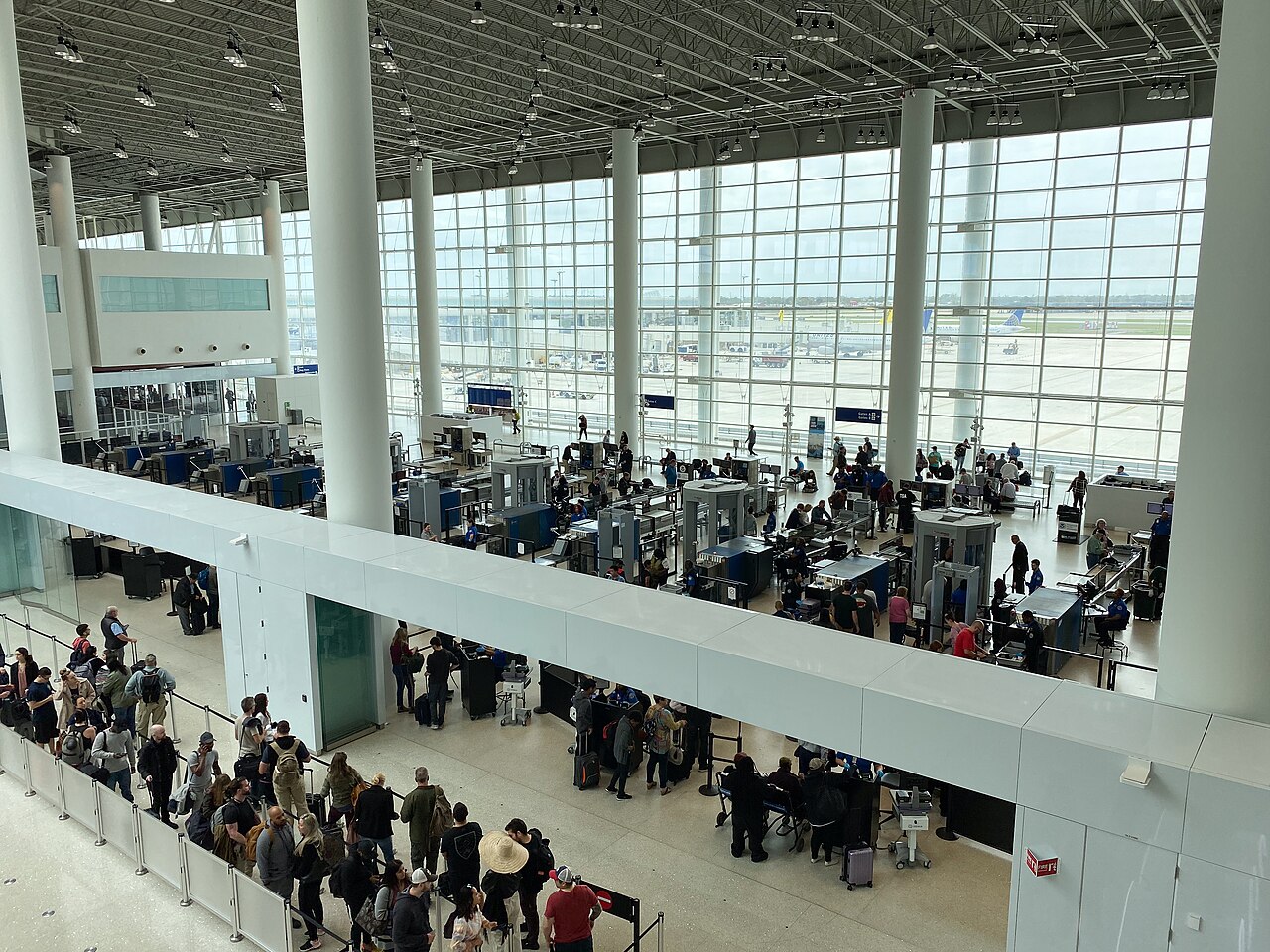
As funding for Transportation Security Administration workers lapsed in mid-February, the Trump Administration put forward an unprecedented move: sending Immigration and Customs Enforcement to airport security lines to assist the TSA with excruciatingly long wait times, which sometimes topped four and a half hours.
As an absence of paychecks dragged on, more and more TSA agents stopped showing up to work. At the peak of the crisis, nearly half of TSA agents were missing—and missed paychecks reached roughly one billion dollars in value. Clearly a solution was necessary, and fast. Was ICE a legitimate quick fix, a band-aid that could be applied until funding resumed? Or was it a further burden on TSA, and a burning of taxpayer dollars?
The core of this issue focuses on what ICE was doing in the airports. ICE is not trained in many TSA operations, such as operating X-ray machines. They are not nearly as skilled as TSA in spotting potential weapons as they attempt to pass through security. They are, however, authorized to guard entrances and exits, verify IDs and carry out overall crowd control. Contrasting their authorizations, though, many have reported seeing ICE not doing much of anything besides people-watching in the terminal. Some TSA agents have stated that ICE is simply “in the way,” and wait times seemed to hardly react to the addition of ICE in airport security lines. In situations where ICE were carrying out security to their fullest ability, officials contend that they did provide varying degrees of meaningful alleviation to TSA in the form of ID checks and security.
ICE was officially deployed to the following airports: O'Hare, Hopkins, Hartsfield-Jackson, Bush, Hobby, JFK, LaGuardia, Louis Armstrong, Luis Muñoz Marín in San Juan, Newark, Philadelphia, Phoenix Sky Harbor, Pittsburgh, and Southwest Florida. However, ICE was also spotted at Dulles and DCA. Now that the TSA's funding has begun to flow again, they've packed up and left many places. But they still quietly remain in some terminals, such as Atlanta's (Hartsfield-Jackson), ranked the busiest airport in the world. Hartsfield-Jackson is still reeling from staff shortages, and ICE's remaining there points to a deeper, more underlying problem with how airports are organized: what happens if (or when) funding lapses again? Nearly 500 TSA agents quit their jobs after the most recent partial shutdown, and likely even more would follow in a future partial shutdown.
Atlanta is now looking into a private security force as an alternative to TSA, which would protect it from funding lapses and allow it to decline ICE help, as security would be unaffected in the event of a lapse. Of course, that wouldn't be necessary if Congress was able to decide on a budget without miring itself in shutdowns and partial shutdowns.
ICE has also had deeply controversial interactions with TSA in the past, such as when TSA shared 31,000 traveler records with them for immigration enforcement and ICE was able to make 800 arrests off of them. For some, the prospect of any further collaboration is disturbing.
ICE is now the most funded law enforcement agency in America, with their annual budget topping $85 billion. In fact, ICE's budget is now larger than every other federal law enforcement agency combined. Being so flush with cash, it theoretically makes sense that if another agency needed assistance with immigration and customs adjacent work, that ICE would be more than equipped to step in. This requires acknowledging, however, that ICE remains a law enforcement agency. They are not trained for aviation security, and should never be placed into a role where they are expected to enforce it. The utmost safety of millions of travellers depends on this—and would be less concerning if ICE didn't have such an existing controversial track record. All in all, ICE was able to slightly assist TSA, but for the roles they were assigned and the money they're being paid to do them—it may have been more efficient for ICE to take some of its ballooning budget and start issuing TSA paychecks.
Lucas Hayden is a freshman from St. Louis majoring in International Politics at the School of Foreign Service.