
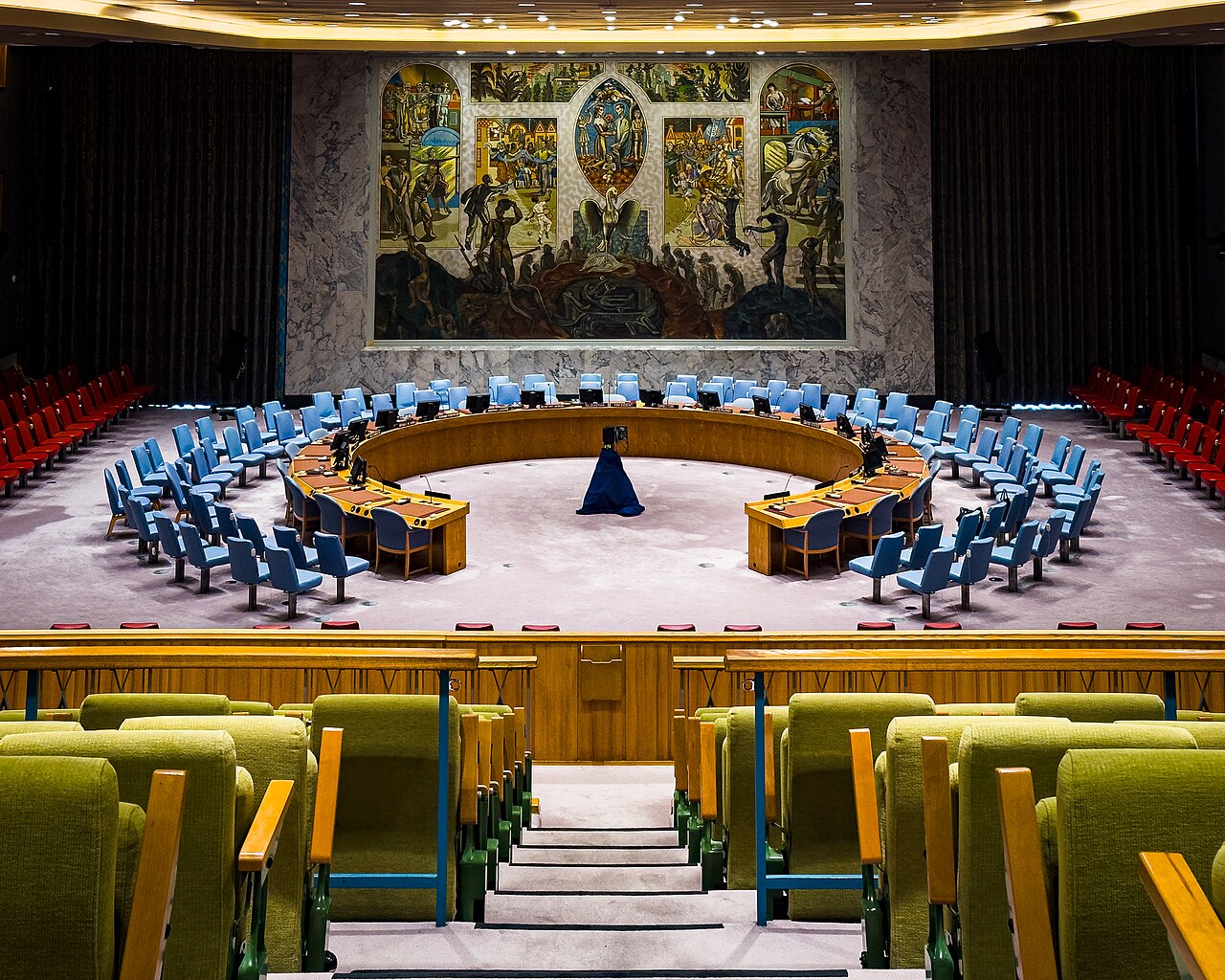
As global crises blur the lines between economics and security, the P5's gridlock meets the G7's growing influence, raising questions about who truly leads the world order.
In the post-war world order, two overlapping but distinct configurations of global power have shaped diplomacy and security: the P5—namely the five permanent members of the UN Security Council (the United States, Russia, China, the United Kingdom and France) and the G7, a group of seven advanced economies whose members coordinate on economic, trade, security and global-governance issues.
In recent years, many have argued that the P5 structure is deserving of multiple critiques including the fact that it's outdated, underrepresentative of rising powers and prone to deadlock in the face of crises. Take the current Israel-Palestine conflict: in June 2025, the US used its veto to block a resolution calling for an “immediate, unconditional and permanent cease-fire” in Gaza, even though all other 14 members voted in favour.
The G7, by contrast, is not a formal security body but a grouping of advanced economies plus the EU. Its focus ranges from trade and climate, to infrastructure and coordinated diplomacy. Currently, the G7 finance ministers have agreed to maintain a united front on China's export controls of rare earths, aiming to reduce overreliance on Chinese production and strengthen economic security through diversified supply chains.
In response to the ongoing war in Ukraine, the G7 has also coordinated sanctions to increase pressure on Russia—particularly by targeting entities that continue to purchase Russian oil. These actions demonstrate how the G7 operates not merely as an economic forum but as a mechanism for collective geopolitical strategy.
The reality is, though both groups differ in promoting their respective goals, they also intersect because both are key forums for global governance and often share overlapping memberships. The P5 includes China and Russia, which are not G7 members; thus the G7 can move on certain fronts without direct inclusion of China or Russia.
A recent article noted that “the UN Security Council passed its fewest resolutions since 1991,” underscoring how P5 disagreement can paralyze action. At the same time, the G7 is stepping up in areas like economic statecraft. The tension between the P5's formal seat of authority on global peace and the G7's de-facto role as coordinator of advanced states raises questions: which forum matters more when action is required?
Ultimately, as more crises emerge that blur the line between economics and security, the relationship between these two groups becomes ever more consequential. Understanding their interplay is crucial if we are to grasp how the world handles—or fails to handle—its most pressing challenges.
Hannah Abdelshahid is a Freshman majoring in International Politics in the School of Foreign Service. She is from Cairo, Egypt.