
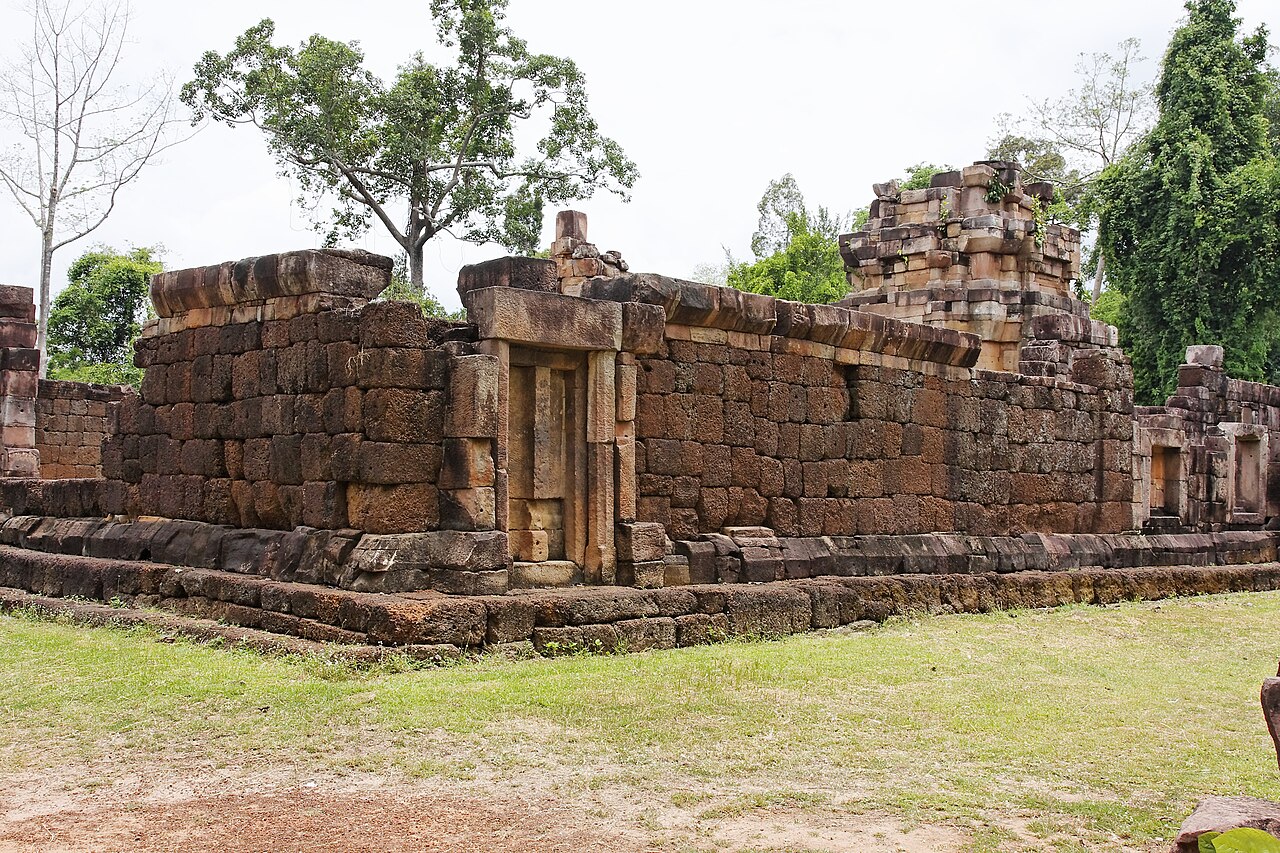
In late July 2025, the long-dormant border conflict between Thailand and Cambodia exploded into open warfare after a land-mine blast near the sacred Hindu temple of Ta Muen left Thai soldiers wounded. The ensuing artillery exchanges marked the gravest fighting between the neighbours in years.
From that flashpoint emerged a seemingly bold diplomatic revolution: on Oct. 26, under Donald Trump and Anwar Ibrahim's watch at the 47th ASEAN Summit in Kuala Lumpur, Thailand and Cambodia signed the so-called “Kuala Lumpur Peace Accord.” Yet just two weeks later, Bangkok announced it was suspending implementation of the pact—not over diplomatic niceties, but after four were injured and one Thai soldier lost a foot stepping on a land-mine.
The border flare-up began when a mine explosion triggered Thai artillery retaliation—escalating into five days of fierce fighting and the displacement of hundreds of thousands. What made the situation different this time was the diplomatic leverage: the U.S. publicly warned that both countries risked tariffs of up to 36% on their exports unless they ceased hostilities. The ultimatum pushed Thailand and Cambodia into talks they had initially resisted, paving the way for the October accord.
However, the deal signed in Kuala Lumpur was, in many ways, a patch rather than a solution. It addressed immediate hostilities but left the core border dispute—centred on colonial-era maps and sacred sites like Ta Muen Thom—unresolved.
Moreover, Thailand's acceptance was conditioned by its own domestic politics. The government in Bangkok, led by Anutin Charnvirakul since September, was under pressure to show a strong response to avoid being seen as capitulating in its long-standing rivalry with Cambodia.
The U.S. trade-leverage angle also introduced resentment. Thailand's elites and public, aware of the country's 1997 economic crisis and the role of external pressure since then, found the tariff ultimatum less a diplomatic overture than raw coercion.
In short: a peace deal achieved under duress rarely yields deep trust.
On Nov. 10, a Thai patrol stepped on a land mine in Sisaket province, leaving one soldier permanently injured. The Thai military blamed Cambodia for placing new mines in violation of the accord. Phnom Penh denied the charge, explaining the blast likely came from older, uncleared ordnance. Thailand responded by suspending implementation of the cease-fire pact: troop withdrawals, prisoner exchanges and de-mining efforts were all put on hold.
So, what does this mean for U.S. influence in Southeast Asia? The United States entered the crisis less as an ally and more as an outside power imposing its will, leveraging tariffs instead of trust. That approach succeeded in forcing the cease-fire, but it also deepened Thai resentment. At the same time, Beijing's quiet presence loomed large. China continues to deepen ties with both Thailand and Cambodia—military, economic, and infrastructure links.
As one looks ahead, there are several possible scenarios. Firstly, a relapse into skirmishes. Secondly, a diplomatic freeze. Thirdly, a reset via ASEAN or China. Finally, a renewed U.S.-Thailand tug-of-war.
The key takeaway for Indo-Pacific strategy is this: enforcing cooperation through pressure may work once. Sustaining alliances, however, requires trust, mutual interest, and legitimacy—not leveraged tariffs and ultimatums.
Aiyana Kaul is a staff writer for On The Record from London, U.K., and a freshman in the SFS studying IPOL.