
The U.S.-Nigeria Partnership and the Emergence of À La Carte Diplomacy
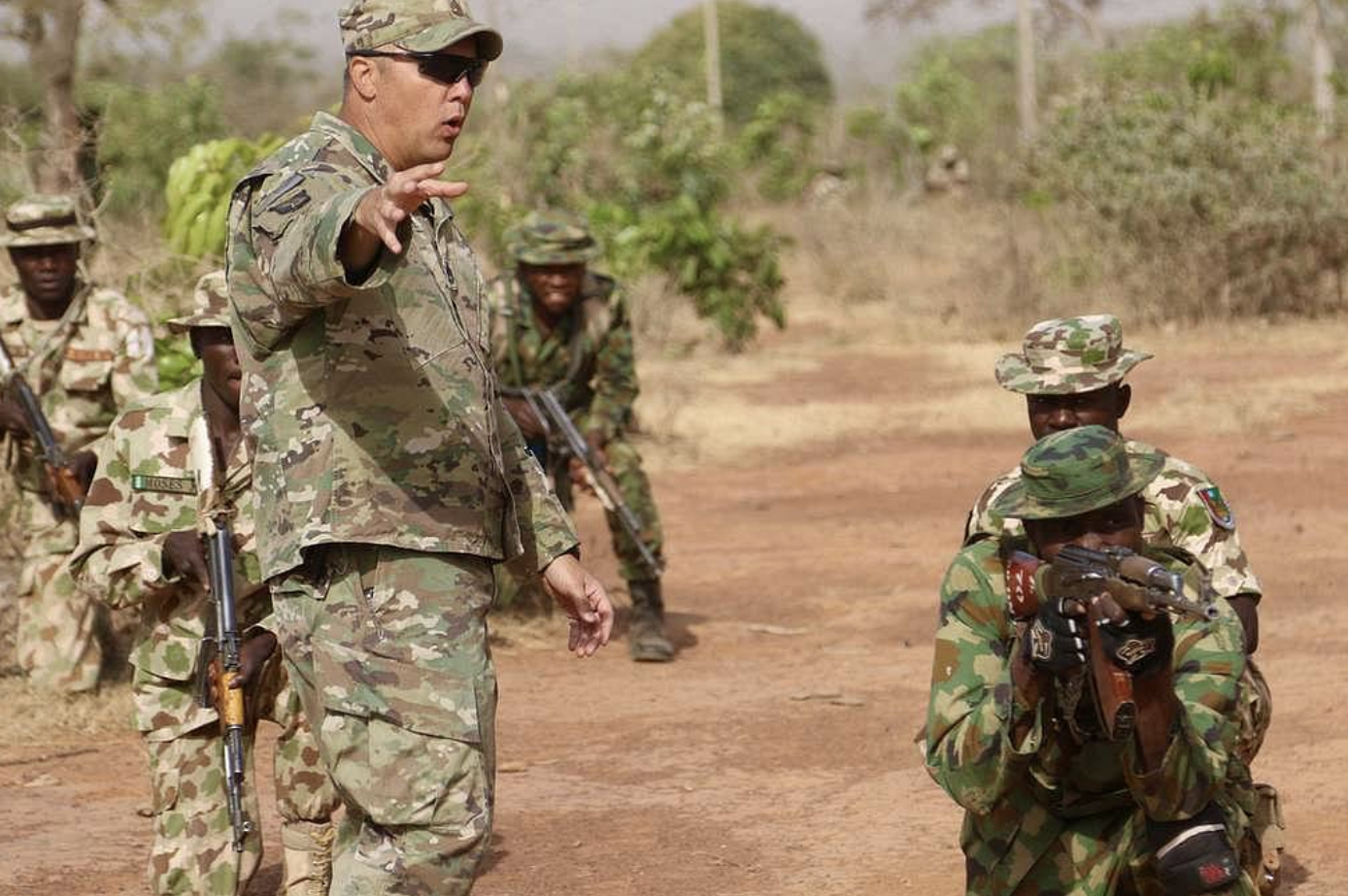
Photo via Picryl
CAROLINE QUINONES: In October 2025, President Donald Trump threatened to carry out strikes in Nigeria in response to alleged anti-Christian violence. In November, American-owned data center provider Equinix announced its ambitious plans to open a new facility in Lagos, backed by $22 million in funding. In December, the U.S. worked with Nigeria to carry out airstrikes against ISIS-affiliated groups in the West African nation. In January, American and Nigerian diplomats met at the Commercial and Investment Partnership (CIP) talks to discuss barriers to trade. And in February, the U.S. deployed 100 troops to Nigeria on a non-combat mission to support the country’s counterterrorism operations.
This is what U.S.-Nigeria relations look like today. The two countries, connected through trade deals, ideological entanglements, and security ties, maintain a functional partnership without any overarching bilateral agreement.
Anchored in a history of pragmatism and mutual benefit , US-Nigeria relations have ebbed and flowed. The US sees opportunity in the West African nation’s vast consumer market, abundant natural resources, and regional dominance, while Abuja looks to Washington’s deep pocketbook for development financing.
U.S.-Nigeria relations have historically centered on oil, democracy, and security, often pursued through case-by-case deals rather than formal alliances or treaties. During the 1967–70 Biafran civil war, the U.S. stayed neutral publicly but continued purchasing Nigerian oil. In 1993, the U.S. imposed sanctions in response to military rule and human rights abuses, only lifting them after the country shifted from stratocracy to democracy in 1999. And after 9/11, the two countries deepened tactical ties such as intelligence sharing and training, with Abuja helping Washington as it targeted terrorist groups such as Boko Haram. Never having been bound by overarching bilateral agreements, the partnership has stayed resilient through this pattern of compartmentalizing ideology away from practical interests.
Today, the U.S.-Nigeria partnership is broad and complex, extending beyond security or energy cooperation: trade in goods and services approached $13 billion in 2024 while U.S. foreign direct investment in Nigeria hit $7.9 billion, up more than 25% from the previous year . On Jan. 29th, diplomats met at the CIP, discussing barriers to trade in negotiations that demanded concessions from both parties.
After President Donald Trump took office, rhetoric became explosive. The allegations of Nigeria’s complicity in a Christian genocide, the Christmas Day airstrikes, the deployment of 100 troops to Nigeria on a non-combat training mission—these headlines demonstrate heightened military support, suggesting deeper ideological and religious entanglements as pro-Christian rhetoric becomes defensive.
Drawing on a history of practicality and made-to-order partnerships, the modern U.S.-Nigeria partnership shaped by a new American administration has become a patchwork of cooperation across sectors and industries, setting it apart from other partnerships that rely on institutions, treaties, and historical precedent.
Historically, diplomatic agreements relied on the expectation that commitments would be honored . This new framework, rooted in à la carte partnerships, moves beyond honoring rules and institutions, trading promises and institutions for independence and flexibility.
This evolution in U.S.-Nigeria relations signals a new era of diplomacy at large: as global actors take on different forms, becoming more powerful, wealthy, and complex, nation-to-nation partnerships will be tailored less to the needs of the governments alone and more to all those with leverage—whether they be state, non-state, private, or public.
Caroline Quinones is a staff writer for On The Record from Nashville, Tennessee, and a sophomore in the SFS studying IPOL.