
Milano Cortina 2026 shows the Olympics can never be apolitical
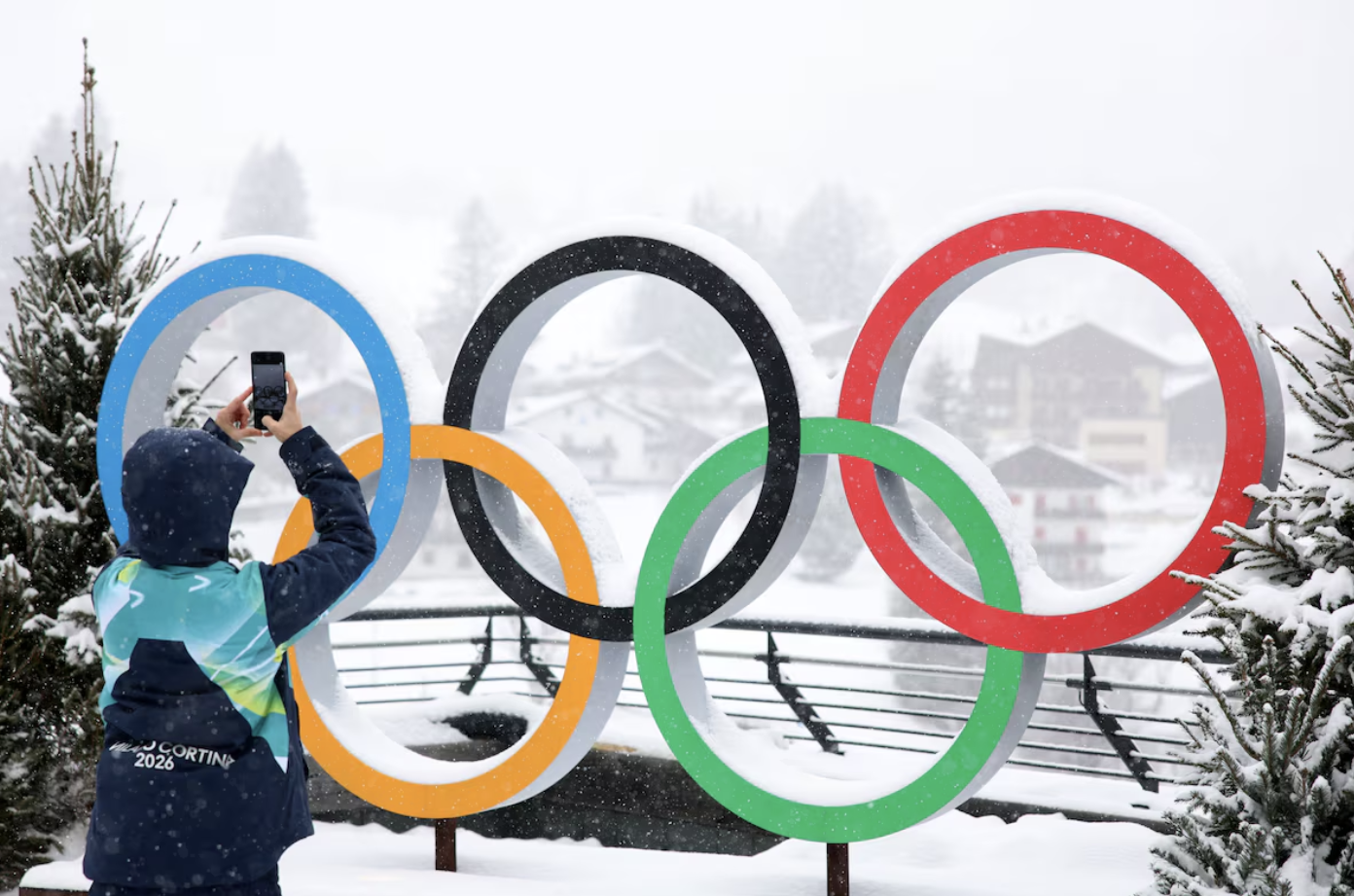
Photo via Reuters
JAYLEN PENG: While the Olympic Games insist on political neutrality, the recently concluded Milano Cortina 2026 Games reaffirmed that their global platform makes true neutrality impossible.
Since the first modern Olympics in Athens in 1896, the Games have brought together the world's top athletes every two years, giving them a chance to compete for personal and national glory. According to the International Olympic Committee (IOC), the stated values of Olympism are “striving for excellence, demonstrating respect, and celebrating friendship,” emphasizing that “there is more that unites us than divides us.” While the Games do accomplish many of their diplomatic goals and highlight shared human values , they have also historically served as a stage for political activism.
The first modern Olympic protest occurred in Athens in 1906, when athlete Peter O’Connor climbed the Olympic flagpole, carrying an Irish flag, to protest being listed as a British competitor. In the 120 years since, there have been many other instances of the competition having political undertones, including the 1936 Berlin Games under Nazi rule , the Cold War rivalry at the 1952 Helsinki Games, and the demonstrations of Black American athletes at the 1968 Mexico City Games at the height of the Civil Rights Movement.
To limit such protests, the IOC implemented Rule 50 as part of its 1975 charter, ruling “no kind of demonstration or political, religious or racial propaganda is permitted in any Olympic sites, venues or other areas.” Applying to athletes and spectators, this regulation was a response to the increase in protests, aimed at maintaining the neutrality of the Games. However, the inability to remove the Olympics from the context of the times they exist in, combined with the international attention, ensures the games will always be political.
Global political tensions were evident at Milano Cortina 2026 before the Games even started. The Trump administration’s recent withdrawal from international diplomacy, including the implementation of high tariffs on many nations, attempting to seize control of Greenland, and the capture of Venezuelan leader Nicholas Maduro, has positioned the United States as an antagonist in international affairs. There were questions about whether this negative perception of the American government would be transferred to its athletes.
Vice President J.D. Vance and his wife, Usha Vance, were met with boos when shown on the jumbotron at the opening ceremony, while American athletes were warmly applauded. Notably, Israeli athletes received a largely negative reception when introduced, reflecting that many of the athletes representing the United States had publicly opposed the Trump administration’s actions, while most of the Israeli delegation supported the state and were more representative of its ideals.
Discussions about freestyle skier Eileen Gu during the 2026 games illustrated the tense relationship between the US and China. Gu was born and raised in San Francisco, CA., with her father from the United States and her mother from China. She started her career representing the United States in international competitions, but made the controversial decision to represent China in the 2022 Beijing Winter Olympics and continued to do so in 2026. Gu cited the opportunity to inspire young Chinese girls who currently lack role models in the sport. Still, many Americans have criticized her choice, citing reports of her direct payments from the Chinese government, with the most extreme critics labeling her as a traitor. Others have pushed back, recognizing the move as beneficial to her as an individual and offering the counterexample of many athletes who now represent the United States rather than their native countries, such as Canadian-born bobsledder Kaillie Humphries, who won gold in 2022 for the US. The rhetoric about Gu also aligns with the increased incidents of hate against Asian Americans, who have been unfairly linked to the COVID-19 pandemic and the Chinese Communist Party in recent years.
The participation of Russian and Belarusian athletes as Individual Neutral Athletes (AIN), similar to Paris 2024, is also a reminder of the ongoing conflict between Russia and Ukraine. To be eligible, athletes must not publicly support the war or be contracted to Russian or Belarusian national agencies, and must compete as neutral athletes. The IOC has implemented these Conditions of Participation to respect its commitment to the Olympic Charter and “the peace mission of the Olympic Movement,” but it is also a rare example of the IOC taking a direct stance on an international conflict.
The IOC still benefits from clinging tightly to the principle of neutrality, even when the governing body and athletes’ actions demonstrate otherwise. The IOC’s claim of impartiality allows it to take positions while avoiding accountability, using vagueness as a shield. While Russia’s invasion of Ukraine resulted in a ban for its athletes, the widely criticized US invasion of Iraq in 2003, and human rights violations by the Chinese government did not receive a similar reaction. While the Olympics claim to exist independently of global politics, it cannot escape global politics and continues to reflect the geopolitical state in which it exists.
Jaylen Peng is an Elections and Politics Staff Writer for On the Record. He is a first-year studying government and economics in the College.