
The Trump Administration’s “Brain Drain” and Attack on the Federal Workforce
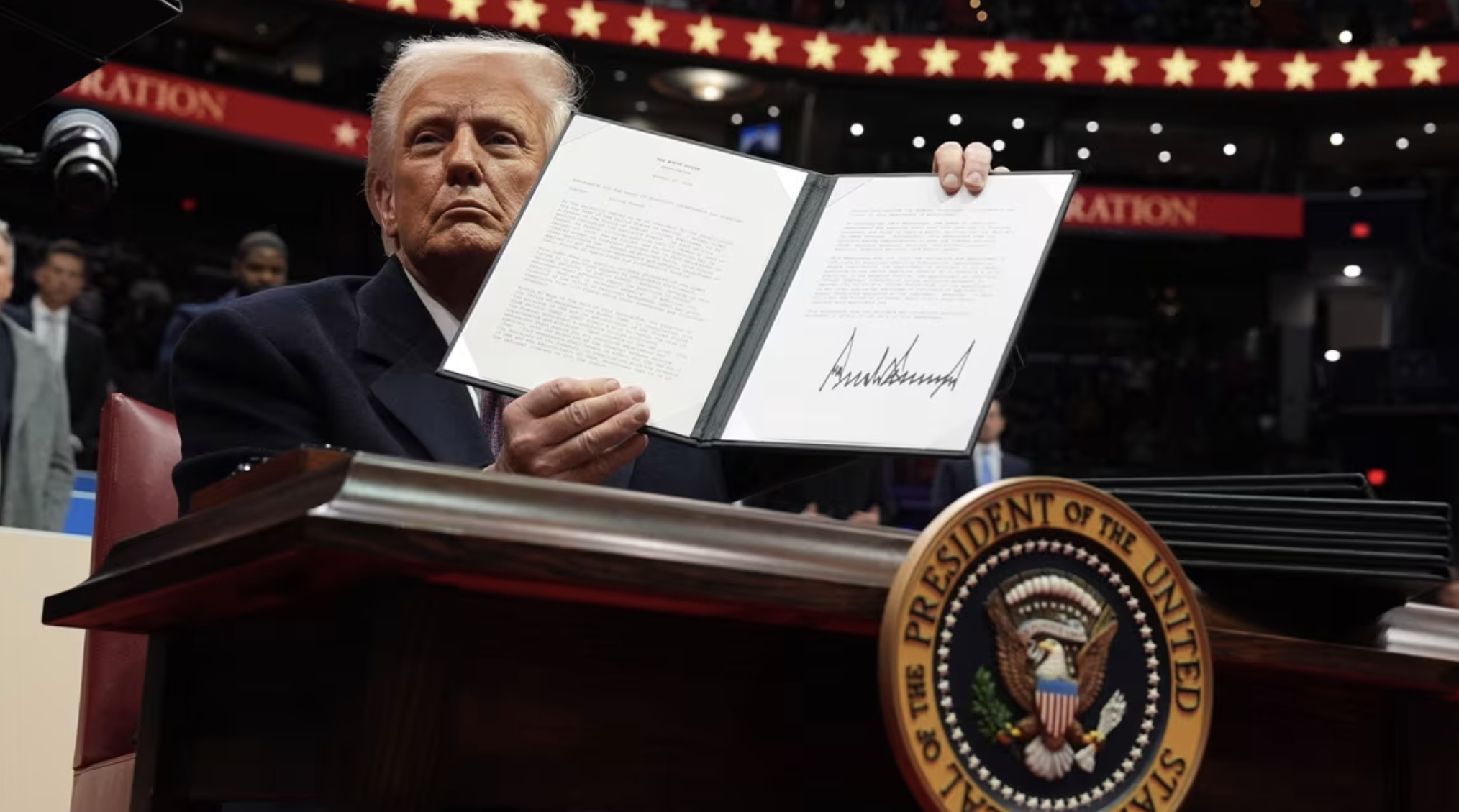
Photo via CNN Politics
JACOB NOLAN: The size of the federal government has long been a hallmark of conservative political talking points and anger. However, federal employment actually increased under George W. Bush and during President Donald Trump’s first term, even if slightly. But Trump’s second administration has taken a different turn, shedding about 323,000 jobs from the federal government’s payroll in just one year, including many expert and vital employees. Additionally, the Trump administration has stripped many federal employees of their collective bargaining rights.
In his return to the White House, Trump promised to root out fraud and waste within the government, even appointing billionaire businessman Elon Musk to lead a Department of Government Efficiency that was meant to reduce employment and investigate fraud. In addition, the Trump administration put pressure on the federal workforce by freezing the hiring of new employees, restructuring federal agencies and impairing the independence of independent agencies, placing employees on administrative leave for long periods of time and offering misleading buy out packages. Despite early legal battles and questions over the infringement on congressional authority, many of these initiatives moved forward.
These policies led to a brain drain of over 10,000 STEM PhDs from the federal government in 2025, whose federal work experience totals over 100,000 years of expertise. These departures only represent about 3% of the total departing federal employees, but they represent over 14% of the total PhDs in STEM fields employed by the federal government. While the Office of Personnel Management classified many of the departures as due to retirement or quitting, many PhD employees quit due to their position being terminated as a result of the federal budget cuts. The hardest hit agencies were ones long targeted by conservatives, including the Environmental Protection Agency, the Department of Energy, the National Science Foundation, and the National Institute of Health. Over a fifth of the EPA’s workforce no longer works for the agency, while the NIH saw over 1100 departures.
Such an exodus is likely to affect the United States’s scientific capabilities for a long time. There are now fewer experienced scientists to train new hires (that have already been scaled back), which could very well hamper the long term replacement of all the departing STEM PhD employees and the future employees who will retire. Along with funding cuts, some scientists are finding that they cannot maintain the equipment vital for their projects, with many experiments being tabled indefinitely. It will be much more challenging for American scientists to continue their research and data collection, as well as to conduct regulatory work. Additionally, universities and the private sector may become more alienated from the federal government due to the hiring freeze. It will also be hard to find replacements or new hires, seeing that many potential employees could be wary of the Trump administration’s pressure and politics.
While federal scientists and researchers are unionized under the umbrella of the United Auto Workers, it remains to be seen how effective this organization can be given Trump’s recent anti-union executive orders. Citing an interest of national security, Trump has directed over a dozen federal agencies to exempt themselves from collective bargaining obligations. Recently, a panel of judges out of the 9th U.S. Circuit Court of Appeals in San Francisco rejected a lawsuit brought forward by unions, ruling in the president’s favor. An elimination of federal union protections and collective bargaining agreements would allow the Trump administration to more freely fire federal workers, and would also hinder union efforts in challenging Trump’s executive orders in court.
The Trump administration’s attack on the federal workforce is likely far from over. It appears that one of the goals of these efforts has been the tightening of the flow of new employees into the federal workforce, not just the downsizing of the government in its current state. The attacks on union representation and the scientific community will weaken scientific research capabilities, diminish the federal government’s ability to effectively respond to public health challenges and limit federal employees’ say in their own direction and employment. If the United States actively opposes the development of its young talent pool, the country’s scientific progress could very well be pushed to the side by other nations.
Jacob Nolan is a freshman from St. Louis majoring in Government and Economics at the College of Arts & Sciences.