
Don Lemon’s Arrest: An Overreach of Federal Power?
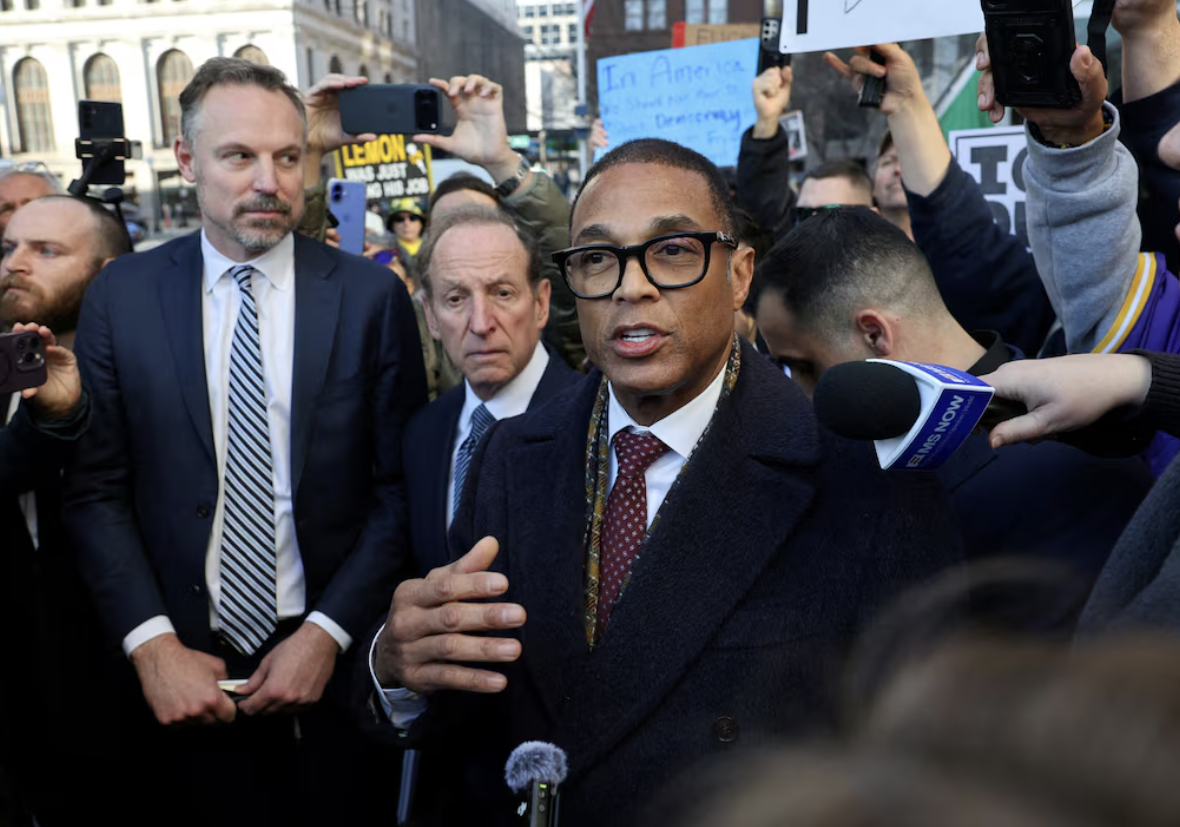
Photo via Reuters
OLIVER WILLIS: Former CNN anchor Don Lemon is fighting back after his arrest on federal charges. His arrest has faced much scrutiny, with both liberal and conservative commentators viewing it as an abuse of federal power.
Lemon, who is now an independent journalist, pleaded not guilty last week in Minneapolis. The charges allege that he violated the Freedom of Access to Clinic Entrances (FACE) Act and conspired to interfere with the religious liberties of worshippers during an anti-ICE protest at Cities Church in St. Paul. The protest, which indeed did disrupt a worship service earlier this year, drew national attention.
The government alleges that Lemon’s presence inside the church, where \demonstrators halted the service, placed him in violation of the FACE Act, a federal statute enacted in 1994 to protect access to reproductive health clinics against protests and violence. The law also contains a clause prohibiting interference with religious worship.
In legal circles, there is scepticism around the prosecution, as it is built on an expansive interpretation of federal authority. They claim that the FACE Act may be unconstitutional as applied here, because it reaches beyond the law’s original purpose and traditional limits of federal jurisdiction. Congress passed the statute largely to address clinic blockades and threats, not to criminalize the presence of journalists at protests. Legal scholars have argued that charging Lemon in his capacity as a journalist could be seen to undermine freedom of the press
Supporters of the prosecution assert that this case is not about silencing journalists but about enforcing boundaries that apply to everyone. Houses of worship, they argue, are not public forums, and the government has a legitimate interest in protecting worshippers’ right to practice their faith without disruption. Journalists, under this view, do not receive First Amendment immunity if they involve themselves in unlawful conduct - whether under the FACE Act or, more plausibly, state laws governing trespass, disorderly conduct, or disruption of religious services. Those state offenses are typically misdemeanors handled locally, yet the decision to elevate the case to federal court under the Trump administration reflects a more aggressive approach in a jurisdiction unlikely to pursue state prosecution.
If the FACE Act can be applied in this context, it raises concerns about press freedom and federal power. Since Lemon did not lead chants, obstruct worshippers, or block entrances, do journalists risk felony charges simply for being present and documenting disruptive protests? This case unfolds amid a renewed emphasis on law-and-order and aggressive federal enforcement during Trump’s second term. If this prosecution stands, it could signal a future in which statutes like the FACE Act are deployed more expansively.
Even if protests targeting ICE such as this one are disruptive, that reality alone does not justify Lemon’s arrest. In the end, the stakes for the future of free speech extend far beyond the Minnesota courthouse where he will stand trial.
Oliver Willis is a freshman studying International Business in the School of Foreign Service. He is from New York City.