
China’s Two Sessions signal a shift toward redistribution
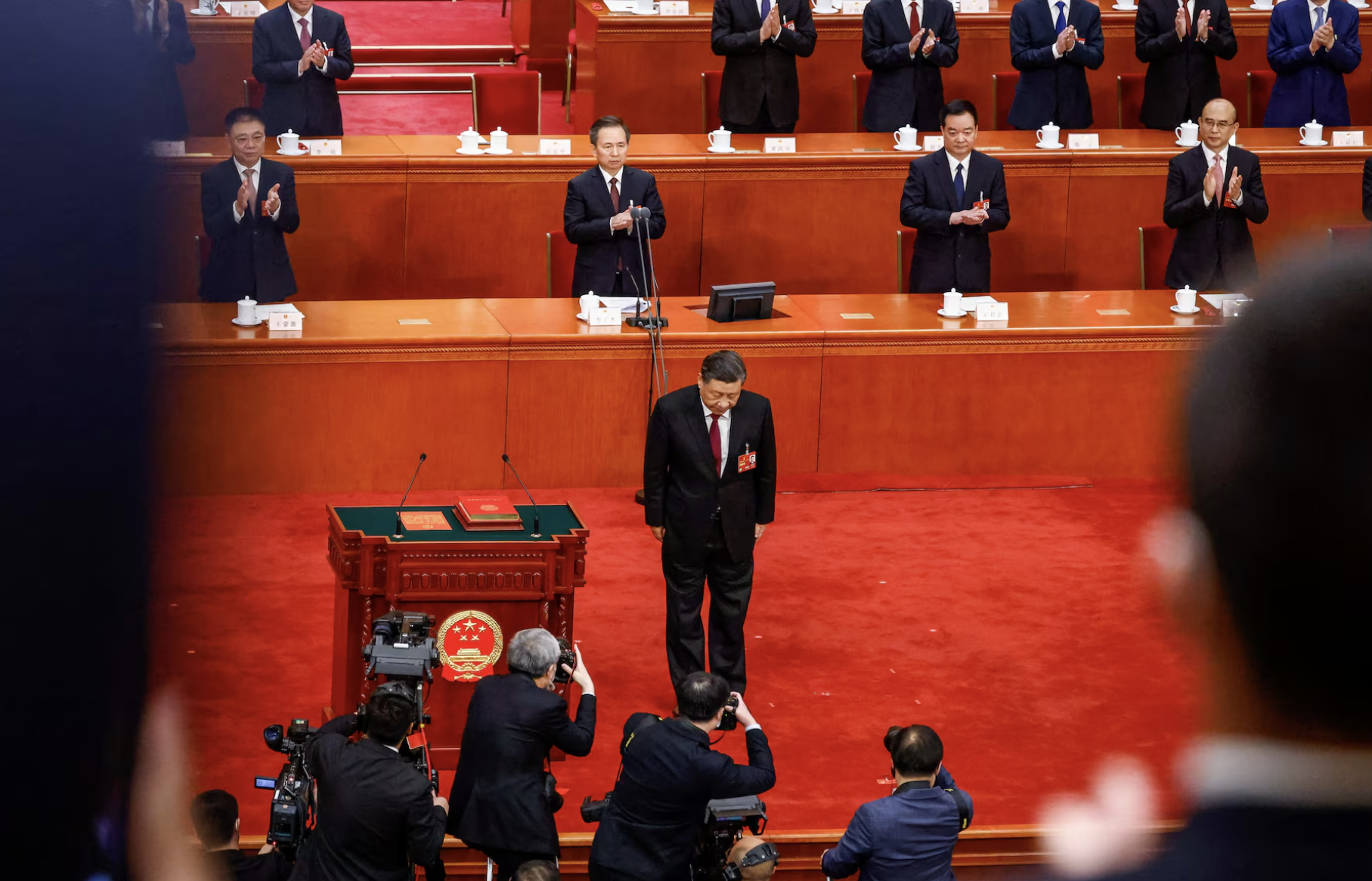
Photo via Reuters
ZHENGHE QIAN: The 2026 National Two Sessions in Beijing revealed a growing ambition within China’s leadership to rebalance the economy through stronger redistribution and consumption. The positive signals from this year’s meetings could mark a turning point in China’s economic grand strategy.
The National Two Sessions are among the most important annual political gatherings in China. As the name implies, it consists of the National People’s Congress (全国人民代表大会), which holds legislative authority and reviews the government’s work while setting policy priorities for the coming year, and the Chinese People’s Political Consultative Conference (全国政协会议), a consultative body where representatives from various sectors discuss and propose policy ideas. Together, these meetings establish the general direction of the country’s political and economic agenda for the year ahead.
This year’s discussions showed a noticeable shift toward strengthening domestic consumption. Chinese policymakers emphasized the application of “a more proactive fiscal policy” for expanding consumer demand, even if doing so requires an unprecedented fiscal spending and debt level. In recent decades, China’s growth model has relied heavily on the production end and the renewed focus on consumption suggests the leadership increasingly views redistribution and household income growth as necessary to sustain economic momentum.
Many proposals from members of the Political Consultative Conference reflect this redistributive orientation. Several trending discussions on several proposals online highlight concerns about inequality and labor protections. One proposal calls for abolishing Labor Dispatch (劳务派遣), an employeement system in which workers are technically hired by intermediary agencies rather than directly by the companies where they work. Because these agencies often operate under looser regulation, dispatched workers generally receive lower wages and weaker social insurance benefits than regular employees. The abolishment of the system would create an equal plane for workers to bargain for better treatments.
Additionally, Economics Professor Luming suggested incorporating labor law compliance into the performance evaluation of bureaucrats. Under the proposal, indicators such as nighttime electricity usage or water consumption in office districts could be used to estimate whether workplaces are violating legal working hours. The idea reflects growing public frustration with the infamous “996” work culture in which employees work 12 hours a day, six days a week.
These redistribution proposals also extend to the countryside. Standardizing pension systems between rural and urban residents also became a heated proposal. At present, rural retirees often receive significantly smaller pensions than their urban counterparts, a disparity that has long symbolized the structural divide between China’s cities and its countryside. These proposals all focus on giving people time and money for the sake of boosting purchasing power, and the popular reception of these proposals signal how the Chinese netizens favor such social reforms.
Skeptics argue that China will not abandon its production-driven growth model, and they are correct in many ways. China’s leadership continues to prioritize industrial upgrading and technological leadership, particularly in sectors such as electric vehicles, solar energy, and advanced manufacturing. The country’s upcoming Fifteenth Five Year Plan is expected to continue large-scale investment in these strategic industries.
Yet this does not contradict the redistributive signals coming from the Two Sessions. Rather, the government appears to be attempting a dual strategy: preserving China’s industrial competitiveness while expanding consumption and improving social welfare. The productive side of the economy helped China weather the downturn triggered by the collapse of its real estate market. But policymakers increasingly recognize that excessive industrial competition and surplus capacity can lead to diminishing returns. Turning productivity gains into higher household income may be the key to transforming economic growth into broader social stability.
Whether this strategy succeeds depends on forces beyond Beijing’s control. Global instability remains a major risk. Many would argue that rising tensions in the Middle East, including potential disruptions around Hormuz, threaten energy supply chains. Indeed, China remains heavily dependent on imported oil and natural gas from the region, and sharp price volatility could undermine economic stability. However, on the other hand, the Chinese green industry(E.V., solar panels, batteries, etc,.) exportation could be benefited in the long run. The net-benefit calculation for China remains unknown.
Domestic obstacles are more serious challenges for Beijing. Local government debt remains a persistent structural problem, and Beijing appears inclined to address it through lower interest rates and continued investment rather than rapid deleveraging. Such policies could risk deepening China’s already large debt burden. Meanwhile, the internationalization of the yuan continues to face obstacles in a volatile global financial environment.
Demographics may present the most fundamental constraint – China’s population has begun to decline, raising concerns about long-term consumption growth. Economic expansion built on domestic demand typically requires a growing consumer base. Without population growth, stimulating sustained consumption will require significant improvements in household income and social welfare.
Despite these obstacles, the signals from this year’s Two Sessions suggest that China’s leadership recognizes the limits of its previous development model. Expanding production without sufficient redistribution risks stagnation and social dissatisfaction. By emphasizing labor protections, rural welfare, and consumer demand, policymakers appear to be attempting to rebalance the system toward a more equitable form of development. Socialism with Chinese characteristics may have just become more socialist.
If these policies are implemented effectively, the 2026 Two Sessions may one day be remembered as a turning point: when China began to reshape its economic model, seeking not only growth but also a more balanced and sustainable prosperity.
Zhenghe Qian is a Junior from SFS-Q majoring in international history.