
Illinois Primary Election Takeaways
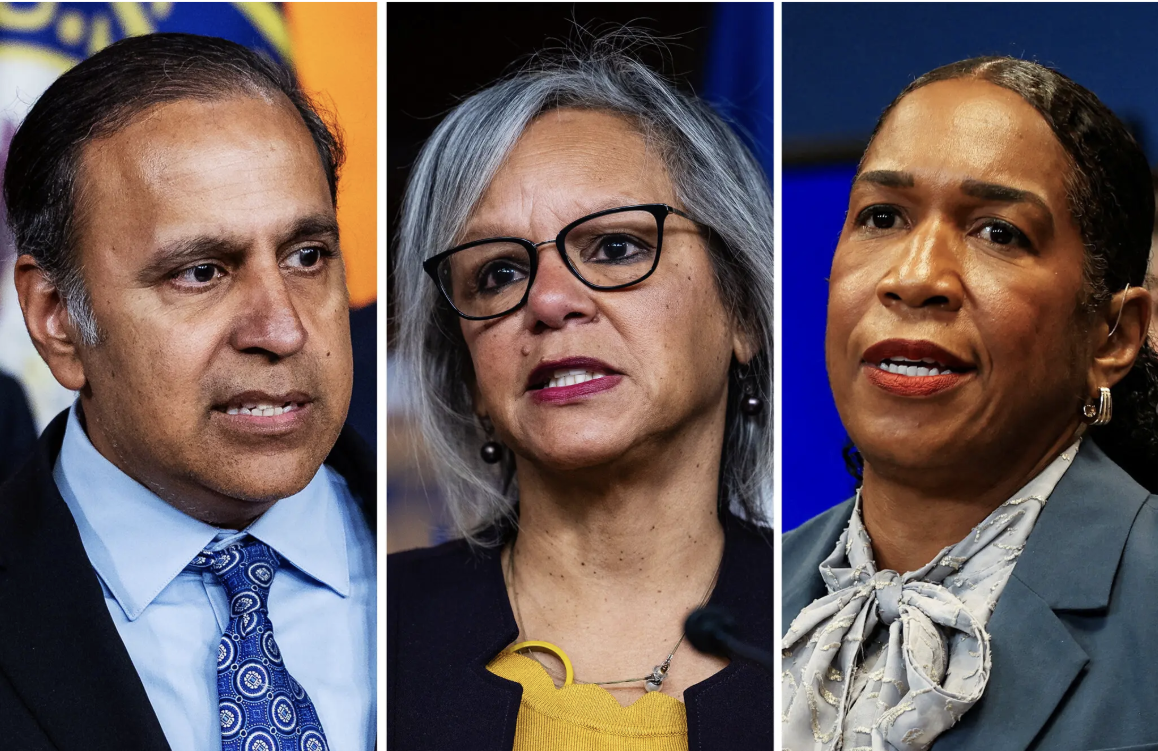
Photo via New York Times
JAYLEN PENG: The March 17 Illinois primary elections were heavily influenced by politicians of the past while also serving as an indication of the future, illustrating the ideological tensions within the Democratic party.
Voters elected candidates for a variety of local, statewide, and national offices, including for the U.S. Senate, the House of Representatives, the state’s governor and legislature and local offices. Chicago’s Cook County is the state’s most populous region and played a major role in both Democratic and Republican primaries, with many candidates from the area. Voter turnout was high, with more than 1.1 million votes counted in the Senate primary, but it did not surpass the 2018 competitive cycle. This indicates that civic engagement within the current political context is high, but not unprecedented.
Most prominent was the race to fill the seat left open by Sen. Dick Durbin (D-IL), who recently announced his plans to retire after five terms. Among the Democratic candidates running to replace him were Reps. Robin Kelly and Raja Krishnamoorthi and Lt. Gov. Juliana Stratton. Stratton, with the endorsement of popular Gov. JB Pritzker, secured the Democratic Party’s nomination for the seat with 40.2% of the vote, followed by Krishnamoorthi, the most well-funded candidate, with 33.1%.
Stratton’s campaign was much more aggressive than Krishnamoorthi's, including many ads directly attacking President Trump, demonstrating voters' frustration with the current administration as they made their choice. This demonstrates that Democrats’ feelings toward President Trump’s second term are strongly negative, but it is still unclear how Republican voters will respond in November. Republicans running included former state party chair Don Tracy, who won with 39.9% of the vote over Attorney Jeannie Evans.
In the House, the retirement of Democratic Reps. Danny Davis and Jan Schakowsky and Kelly’s and Krishnamoorthi’s Senate bids have left four vacant seats, inspiring several candidates to run to replace them. Moderate Democrat and former representative Melissa Bean successfully completed a political comeback, defeating Junaif Amhed, a progressive backed by Bernie Sanders and Elizabeth Warren. This could potentially indicate that after losing the presidential election in 2024, the Democratic voters are currently favoring less extreme candidates and want the party to be headed in a more moderate direction.
Pritzker ran unopposed for the Democratic renomination as governor and his increasingly prominent national profile has led to speculation about a 2028 Democratic presidential bid. For the Republicans, Darren Bailey secured a majority of the vote with 53.5%.
The winners of the Democratic primaries have a strong advantage going into the November midterm elections, as Illinois is considered a strong “blue” state, favoring Democrats who have won recent statewide elections with over 55% of the vote. However, ideological tensions and generational conflicts remain clear, and while a Democratic win seems likely, it is not guaranteed. These disputes were evident in the primary election results, with a wide range of Democratic nominees and inconsistent choices by voters, fueling the uncertainty the party faces as it prepares for the midterms.
Jaylen Peng is an Elections and Politics Staff Writer for On the Record. He is a first-year studying government and economics in the College.